Walk in with a laptop. Walk out with a working agent.
A 4-hour, in-person AI Agent Build Intensive in Raleigh. You’ll build a real research agent, learn the patterns to build any agent next, and leave owning the work. No platform lock-in. No consultant on retainer.
Venue
COMPASS · Raleigh3800 Glenwood Ave, Suite 150 · 27612
4 hoursOne build12 seats maxMac or Windows + Claude MAXHIPAA-awareNo platform lock-inYou keep the build
01 · The Build
What you’ll walk out with.
A working research agent you built yourself, plus the patterns and judgment to build any agent next. Concretely, by 3:00 PM Saturday you will have:
01
A configured environmentClaude Code + OpenClaw, running locally on your machine.
02
A custom SKILL.mdWritten for a workflow you actually do every week, not a demo scenario.
03
A working agentThat uses your skill, built and refined live in the room with Jon.
04
A standing CLAUDE.mdSo Claude knows who you are and what you do every time you open it.
05
The mental modelsFive-memory model. Recipe-card method for skills. The 20-minute workflow audit.
06
Three agents to build nextA ranked short-list for your specific work, to ship in the following week.
You leave owning your build. No platform lock-in.
02 · Who it’s for
This intensive is for you if…
Three audiences keep showing up to these sessions. If you see yourself in one of them, the seat is for you.
A
The operator-builder
You run ops at a 5–30 person service firm, agency, contractor, or manufacturer, and you keep watching AI demos and wondering where to start in your actual business.
Service ops · Dispatch · Quoting
Internal champion, no IT team
Wants leverage by Friday
B
The regulated professional
You work in healthcare, legal, or financial services and want to learn agent-building from someone who treats HIPAA, SOC 2, and audit posture as design constraints from the start.
PHI, PII, privileged comms
Compliance officer on speed-dial
Patterns over platforms
C
The curious knowledge worker
You’re a consultant, analyst, or internal AI champion who can prompt fine and wants to ship a real agent next, not another demo, not another deck.
Prompts daily, has plateaued
Wants the next 10× move
Brings a workflow worth automating
Common to all three: You’ve used Claude before. You’re comfortable enough with a laptop to follow along. You can describe a process clearly. Coding experience is not required.
03 · Agenda
Four hours, one build.
A 20-minute workflow audit before a single line of prompt is written. Then we build, observe, and revise, all the way through to a working agent on your laptop.
11:00 – 11:20
Workflow auditIdentify the right thing to automate first. Stop automating the wrong things.
20 min
11:20 – 11:50
The whiteboard mental modelWhy Claude forgets, the five memory types, the two no-setup tricks that work right now.
30 min
11:50 – 12:30
Skills: the recipe-card methodSKILL.md anatomy, the description field as a trigger, semantic matching.
40 min
12:30 – 12:45
BreakCoffee, water, breathe.
15 min
12:45 – 1:45
Build your first skill hands-onWrite, test, observe, revise. The full loop, on your laptop. This is the hour the whole day is about.
60 min
1:45 – 2:30
Tool use + OpenClawFile access, browsing, code execution, the gateway. Wire your skill into a working agent.
45 min
2:30 – 2:50
Break & bug-huntStuck? This is where we fix it.
20 min
2:50 – 3:00
What to build next weekThe three highest-leverage agents for your work, ranked.
10 min
04 · Built for your workflow
Why this works.
Four working principles, lifted from the way Cohort 001 actually unfolded. These are the mantras you’ll hear at the whiteboard, then again at the laptop, then again in the bug-hunt.
M / 01
We build for your workflow, not ours.
Most AI courses teach you to copy a generic example. This one teaches you to build for the work you actually do. Your sources, your tools, your compliance posture.
M / 02
We de-risk through iteration.
You leave with an agent you broke and rebuilt in the room. If it doesn’t work by 3 PM, we keep going until it does.
M / 03
We transfer ownership, not dependency.
No platform lock-in. No consultant on retainer. You keep the build, the templates, the patterns, and the judgment to build the next one.
M / 04
Stop automating the wrong things.
Most people automate noise. The intensive opens with a 20-minute workflow audit so the first agent you build is one worth building.
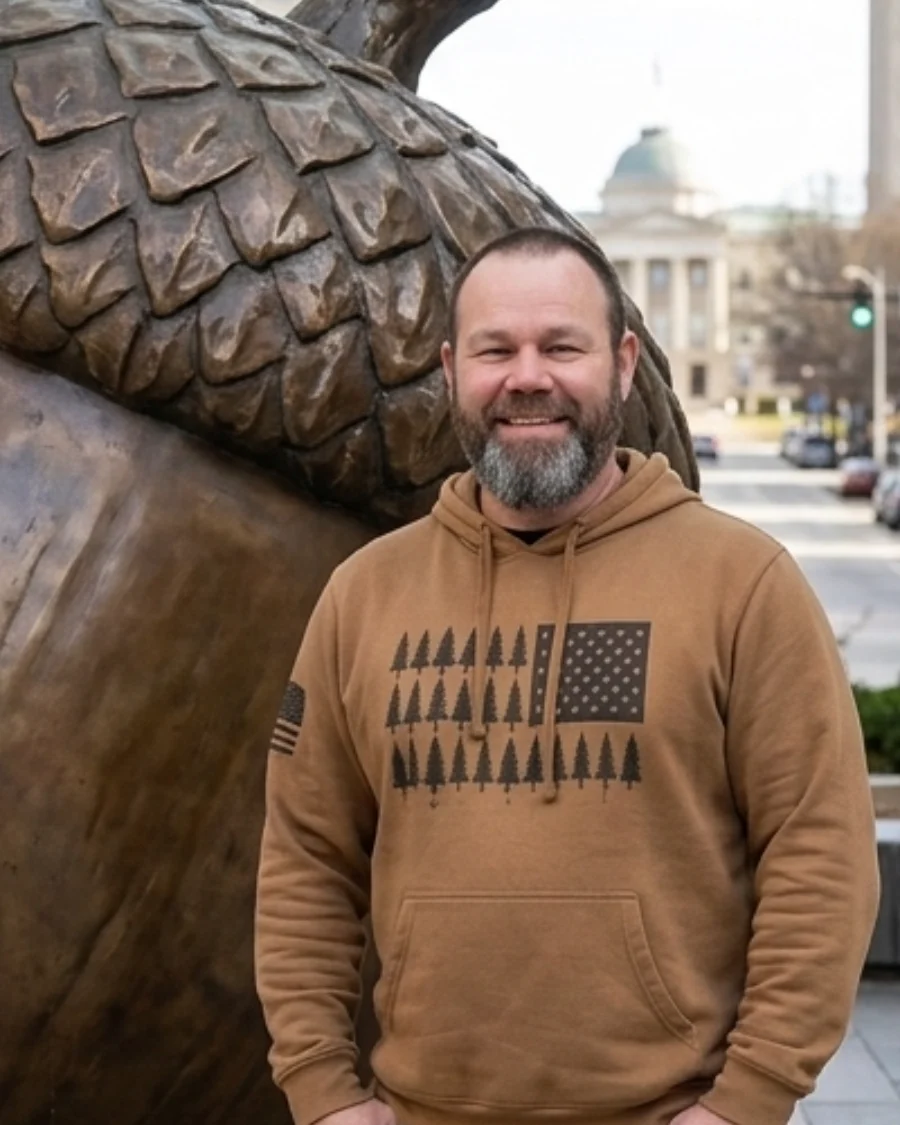
Jon Klinger · Founder, KITSCo
05 · Who’s teaching
An operator teaching operators how to build.
Jon Klinger teaches operators and clinicians how to build Claude agents that survive contact with real work. Cohort 001 was four students from four very different fields: a bathroom contractor, a leadership coach, a software engineer, and a hospitalist.
His method has shipped production agents in regulated clinical settings, small-business operations, and professional services. He’ll be at the whiteboard for the first hour, and beside your laptop for the next three.
Cohort 001: 4 students, 4 different fields
The mix: bathroom contractor, leadership coach, software engineer, hospitalist
Thanks again for yesterday’s teaching session on AI agents. It was excellent, and the templates and slides you sent through have already given me a working roadmap. I’m putting your instruction into practice and starting to build four agents of my own: Research, LinkedIn Post, Travel Arrangement, Executive Assistant.
C
Chi Huang, MDHead of Hospitalist Consortium · Cohort 001 graduate
Anything we hedge on, we say in plain English: “Anything under 3:1 ROI we don’t build.”
07 · The kit
What you need on Saturday.
A pre-class setup checklist goes out 5 days before. If you hit any environment snag, you’ll have time to fix it before Saturday.
A laptop (Mac or Windows)Bring whatever you work on daily. A platform-specific setup checklist goes out 5 days before — just follow the steps.
A Claude MAX planActive by Friday, June 26 at the latest. We cover provisioning in the pre-class email.
Admin rights on your laptopYou’ll be installing Node.js and the OpenClaw gateway. Windows users will also need WSL2.
A real workflow in mindOne you do every week, that you’d like the agent to handle. Bring notes.
Coffee, water, and snacks provided. Lunch is on you, there’s great food walkable around 3800 Glenwood.
08 · Frequently asked
Honest answers to real questions.
If yours isn’t here, email us. We reply same business day, no autoresponders.
Will this work for my regulated industry?
Yes, with care. The intensive teaches HIPAA-aware patterns and the data-separation principles that apply to any regulated workflow (PHI, PII, financial data, privileged communications). Cohort 001 included a hospitalist who is now shipping agents in a clinical setting.
This page is not legal advice. Your specific deployment should be reviewed by your compliance officer or counsel. We give you the patterns and the judgment to have that conversation well.
Do I need to know how to code?
No. You need to be comfortable on a computer and able to describe a process you do regularly. The course teaches you to write skill files (plain English instructions in a structured format), not Python or JavaScript.
What’s a “research agent”? Why is that the build?
A research agent is the highest-leverage starter agent. It teaches you skills (procedure), memory (so it remembers what you care about), and tool use (browsing, file access) in one build. Master it and you can build any agent next.
What if I get stuck during the session?
That’s the design. We allocate a full 20-minute bug-hunt block, and Jon stays after the session for anyone whose environment isn’t fully working by 3 PM.
What’s the refund policy?
Full refund if you cancel by June 13 (14 days before). 50% refund between June 14 and June 20. After that, no refund, but your seat is transferable to someone else in the Triangle.
Where do I park?
3800 Glenwood Ave has on-site parking. Detailed venue notes (entrance, suite 150 directions, parking) go out with the pre-class checklist.
The June cohort has wrapped and the next one is being planned. Drop your email and we’ll tell you the moment it opens — plus the Chi case study and a short essay on the “stop automating the wrong things” framework.